SKU:ALM-ART-0056
Angel Lane Manor
Child Daguerreotype Portrait
Child Daguerreotype Portrait
Couldn't load pickup availability
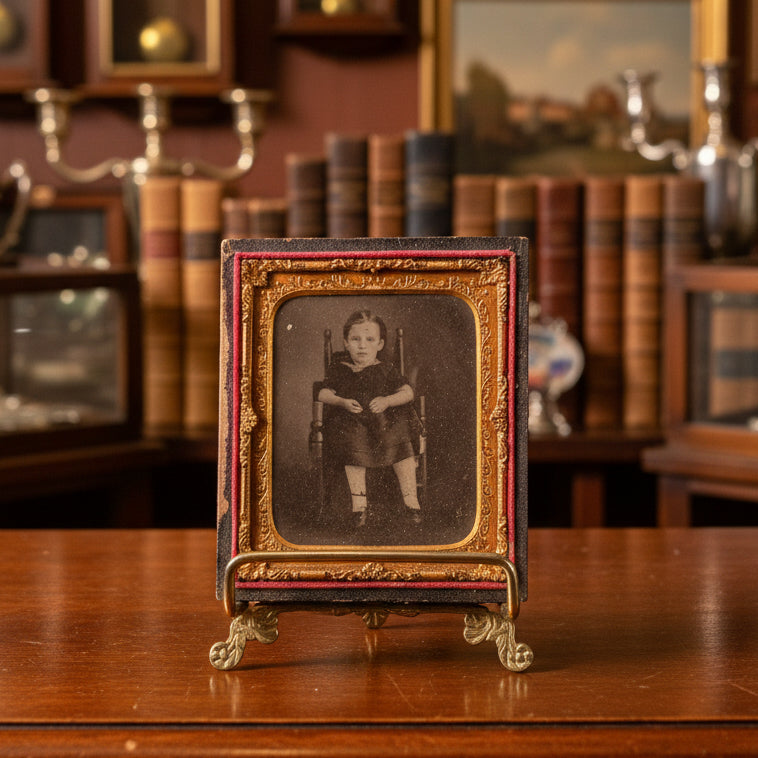
A daguerreotype portrait of a child in a decorative frame.
An antique sixth plate daguerreotype photograph of a young child, housed in a velvet-lined case with an ornate brass mat and protective glass cover.
The daguerreotype process, invented by Louis Daguerre in 1839, was the first commercially successful photographic process. It produced a unique, highly detailed image on a silver-plated copper sheet, which was then developed using mercury vapor. These early photographs were often presented in ornate cases or frames, making them both historical documents and decorative objects.
Daguerreotypes were particularly popular for portraiture during the mid-19th century, offering individuals a way to capture likenesses before the advent of more accessible photographic methods. Portraits of children, like the one depicted, are especially poignant as they provide a rare glimpse into the lives of families from this era. The condition of the daguerreotype and its accompanying frame significantly influences its value to collectors.
Daguerreotypes were the first publicly available photographic process, introduced by Louis Daguerre in 1839. These images were captured on silver-plated copper sheets sensitized with iodine vapor, producing highly detailed, mirror-like images. They dominated the portrait market until the mid-1850s when cheaper, easier processes like ambrotypes and tintypes emerged.
- Period: Circa 1850s-1860s
- Origin: United States
Share